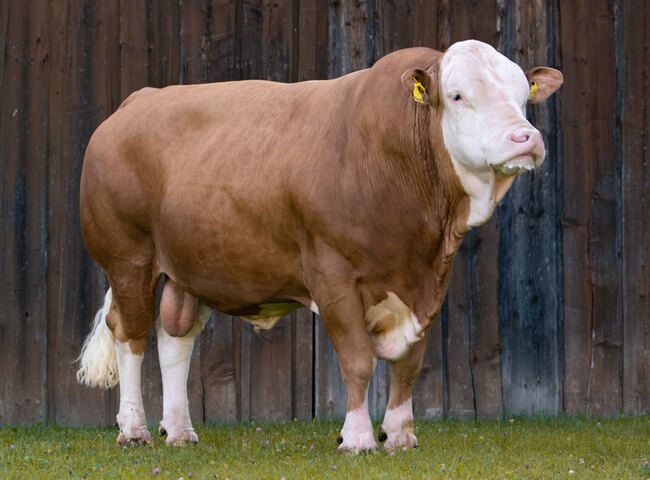

Examination of bulls for breeding soundness
Cattle breeders often focus most of their attention on the fertility of individual cows, while the bull’s role in herd fertility is frequently overlooked. The purpose of a PBE (Pre-Breeding Examination) is to identify bulls that may be unsuitable for breeding, thereby preventing potential fertility losses within the herd.
Large studies worldwide have shown that up to 20% or more of bulls examined during routine screening fail their PBE. The reasons for failure vary and may include physical abnormalities or poor semen quality. While true infertility (complete inability to impregnate) is rare, subfertility is relatively common.
Subfertility often develops in older bulls due to infections or injuries acquired over time. Importantly, good fertility in one breeding season does not guarantee optimal performance in the next. A bull certified as “Suitable for Breeding” poses significantly less risk than one that has not undergone examination. Therefore, we recommend testing bulls annually before each breeding season.
The ideal time to assess a bull’s reproductive performance is four to six weeks before the mating season. This allows for a proactive approach in identifying and excluding subfertile bulls. Fertility testing may also be carried out before bulls are sold.
A purpose-made scrotal measuring tape should be pulled tight around the widest part of the scrotum until the skin is indented. Furthermore, a sonographic examination provides further useful information in assessing the reproductive health of the animal.
Electro ejaculator (EEJ) or artificial vagina (AV):
When carrying out routine PBE, semen is collected using EEJ; in most cases, however, the use of an AV is also an option when collecting trained bulls.
A CASA system is recommended for assessing semen quality in an objective, repeatable manner, and for documentation purposes.
Minitube equipment
The PBE generally consists of three main components, plus optional tests.
Physical examination
The goal here is to ensure the bull is healthy, sound, and capable of mounting and breeding.
Semen collection and evaluation
Usually performed via electroejaculation or an artificial vagina in trained bulls.
Assessment of mating ability
Assessed via observed serving capacity test or pasture observation.
1. Physical examination
Before entering the restraining pen, bulls should be observed walking on a smooth, level surface to check for signs of lameness. The limbs should then be carefully inspected for any conformational defects. Although some defects may not cause lameness at the time of examination, many have a hereditary component or may lead to lameness later in life, rendering the bull unsuitable for certification.
Securely restrain the bull in the crush and allow a few minutes for it to relax. A non-slip surface, such as a rubber mat, helps prevent the animal from losing its footing during electroejaculation.
A complete clinical examination of the external and internal reproductive organs should follow, including measurement of testicular size. For bulls older than four years, sampling for Campylobacter and Trichomonas may be recommended.
Ultrasonography can be used to further evaluate the testicles. The Minitube ultrasound device 3.0 Plus is a diagnostic tool that complements standard assessment methods. Differences in testicular echogenicity or the presence of areas of calcification or fibrosis may indicate chronic degeneration.
2. Semen collection and evaluation
Semen can be collected in the field using several methods, including artificial vagina (AV), electroejaculation (EEJ), and massage of the ampullae. For routine pre-breeding examinations, EEJ is typically preferred because it allows collection from most bulls directly after the physical exam, while they remain restrained in the crush. This method is quick, safe, and does not require teaser females, provided that an appropriate containment crush is available.
Before inserting the probe, the bull should be pre-stimulated for up to 60 seconds by gentle rectal massage of the ampullae, prostate, and pelvic urethra, typically done immediately after examination of the internal accessory sex glands. During this stimulation, the bull often protrudes the penis and may drip pre-ejaculatory fluid. The probe is then carefully inserted, ensuring firm contact with the rectal floor while avoiding pneumorectum.
Electrical stimulation, delivered as a series of short, low-voltage pulses, triggers ejaculation by stimulating specific nerves. The Minitube electro ejaculator features a modern digital power control system that allows precise adjustment in both manual and automatic modes. It includes a built-in battery with sufficient capacity for multiple uses under normal conditions.
As stimulation is applied, the bull will typically rock forward, and clear pre-seminal fluid will appear at the preputial orifice as the penis extends. Most bulls will protrude the penis partially or fully before ejaculating. The operator should closely watch for a change in the fluid’s appearance from clear to opaque or milky, indicating the start of semen flow. At this point, the hand-held collection cone, with an attached collection tube, should be positioned over the glans penis or preputial orifice. The clear pre-seminal fraction, which originates from the bulbourethral glands and serves as a lubricant, should not be collected.
More than 95% of bulls will produce a suitable sample for semen evaluation using EEJ.
Once collected, the semen sample should be taken immediately to the field laboratory for analysis of volume, concentration, and total and progressive motility. These parameters must be measured objectively to ensure accuracy and validity.
Computer Assisted Semen Analysis (CASA) provides precise assessments of sperm concentration and motility, improving analytical accuracy. The AndroScope delivers rapid, reliable results, analyzing sperm concentration, motility, and kinematic data within seconds. Its compact size allows for on-site use, and results can be viewed live, saved, and exported as a PDF report for easy sharing.
When used with the optional AndroScope Wi-Fi station, the device can connect wirelessly to any mobile device. For optimal sample preparation, the mobile warming unit offers a convenient solution for preheating semen samples, slides, or counting chambers.
3. Assessment of mating ability
To assess mating ability, a suitable estrus female must be available on the day of the PBE. The bull should be observed achieving intromission and an ejaculatory thrust with at least one successful service within 10 minutes of introduction to the female.
Evaluating libido accurately from a single observation is challenging, as many factors — including age, experience, dominance, hierarchy, and concurrent illness — can influence behavior. Therefore, it is essential that farmers continue to monitor bulls closely during the breeding period to assess mating behavior.
Annual PBEs represent a valuable risk reduction strategy and should be considered best practice for all breeding herds. Identifying subfertile bulls is an integral part of herd fertility management.
By conducting regular PBEs, significant economic losses in herds due to bull infertility or subfertility can be prevented. Farmers should be encouraged to observe bulls carefully throughout the mating period, and veterinarians must ensure that PBEs are performed to a high and consistent standard, using appropriate, well-maintained equipment, to preserve the procedure’s credibility.
Large studies worldwide have shown that up to 20% or more of bulls examined during routine screening fail their PBE. The reasons for failure vary and may include physical abnormalities or poor semen quality. While true infertility (complete inability to impregnate) is rare, subfertility is relatively common.
Subfertility often develops in older bulls due to infections or injuries acquired over time. Importantly, good fertility in one breeding season does not guarantee optimal performance in the next. A bull certified as “Suitable for Breeding” poses significantly less risk than one that has not undergone examination. Therefore, we recommend testing bulls annually before each breeding season.
When should testing be done?
Research shows that most Bos taurus bulls reach puberty and produce normal semen by around 16 months of age. Bulls examined before this age tend to have a higher PBE failure rate due to immaturity and incomplete semen development. A brief history should be taken to confirm there have been no recent illnesses, lameness, or veterinary treatments that might affect semen quality.The ideal time to assess a bull’s reproductive performance is four to six weeks before the mating season. This allows for a proactive approach in identifying and excluding subfertile bulls. Fertility testing may also be carried out before bulls are sold.
Equipment and materials
A scrotal tape and, optionally, an ultrasound scanner:A purpose-made scrotal measuring tape should be pulled tight around the widest part of the scrotum until the skin is indented. Furthermore, a sonographic examination provides further useful information in assessing the reproductive health of the animal.
Electro ejaculator (EEJ) or artificial vagina (AV):
When carrying out routine PBE, semen is collected using EEJ; in most cases, however, the use of an AV is also an option when collecting trained bulls.
A CASA system is recommended for assessing semen quality in an objective, repeatable manner, and for documentation purposes.
Minitube equipment
- Electro ejaculator with probes, or alternatively, artificial vagina
- Collection set for EEJ
- Ultrasound device
- AndroScope and warming unit
- ReproJelly
- Insemination gloves
How should it be done?
The PBE generally consists of three main components, plus optional tests.Physical examination
The goal here is to ensure the bull is healthy, sound, and capable of mounting and breeding.
Semen collection and evaluation
Usually performed via electroejaculation or an artificial vagina in trained bulls.
Assessment of mating ability
Assessed via observed serving capacity test or pasture observation.
1. Physical examination
Before entering the restraining pen, bulls should be observed walking on a smooth, level surface to check for signs of lameness. The limbs should then be carefully inspected for any conformational defects. Although some defects may not cause lameness at the time of examination, many have a hereditary component or may lead to lameness later in life, rendering the bull unsuitable for certification.
Securely restrain the bull in the crush and allow a few minutes for it to relax. A non-slip surface, such as a rubber mat, helps prevent the animal from losing its footing during electroejaculation.
A complete clinical examination of the external and internal reproductive organs should follow, including measurement of testicular size. For bulls older than four years, sampling for Campylobacter and Trichomonas may be recommended.
Ultrasonography can be used to further evaluate the testicles. The Minitube ultrasound device 3.0 Plus is a diagnostic tool that complements standard assessment methods. Differences in testicular echogenicity or the presence of areas of calcification or fibrosis may indicate chronic degeneration.
2. Semen collection and evaluation
Semen can be collected in the field using several methods, including artificial vagina (AV), electroejaculation (EEJ), and massage of the ampullae. For routine pre-breeding examinations, EEJ is typically preferred because it allows collection from most bulls directly after the physical exam, while they remain restrained in the crush. This method is quick, safe, and does not require teaser females, provided that an appropriate containment crush is available.
Before inserting the probe, the bull should be pre-stimulated for up to 60 seconds by gentle rectal massage of the ampullae, prostate, and pelvic urethra, typically done immediately after examination of the internal accessory sex glands. During this stimulation, the bull often protrudes the penis and may drip pre-ejaculatory fluid. The probe is then carefully inserted, ensuring firm contact with the rectal floor while avoiding pneumorectum.
Electrical stimulation, delivered as a series of short, low-voltage pulses, triggers ejaculation by stimulating specific nerves. The Minitube electro ejaculator features a modern digital power control system that allows precise adjustment in both manual and automatic modes. It includes a built-in battery with sufficient capacity for multiple uses under normal conditions.
As stimulation is applied, the bull will typically rock forward, and clear pre-seminal fluid will appear at the preputial orifice as the penis extends. Most bulls will protrude the penis partially or fully before ejaculating. The operator should closely watch for a change in the fluid’s appearance from clear to opaque or milky, indicating the start of semen flow. At this point, the hand-held collection cone, with an attached collection tube, should be positioned over the glans penis or preputial orifice. The clear pre-seminal fraction, which originates from the bulbourethral glands and serves as a lubricant, should not be collected.
More than 95% of bulls will produce a suitable sample for semen evaluation using EEJ.
Once collected, the semen sample should be taken immediately to the field laboratory for analysis of volume, concentration, and total and progressive motility. These parameters must be measured objectively to ensure accuracy and validity.
Computer Assisted Semen Analysis (CASA) provides precise assessments of sperm concentration and motility, improving analytical accuracy. The AndroScope delivers rapid, reliable results, analyzing sperm concentration, motility, and kinematic data within seconds. Its compact size allows for on-site use, and results can be viewed live, saved, and exported as a PDF report for easy sharing.
When used with the optional AndroScope Wi-Fi station, the device can connect wirelessly to any mobile device. For optimal sample preparation, the mobile warming unit offers a convenient solution for preheating semen samples, slides, or counting chambers.
3. Assessment of mating ability
To assess mating ability, a suitable estrus female must be available on the day of the PBE. The bull should be observed achieving intromission and an ejaculatory thrust with at least one successful service within 10 minutes of introduction to the female.
Evaluating libido accurately from a single observation is challenging, as many factors — including age, experience, dominance, hierarchy, and concurrent illness — can influence behavior. Therefore, it is essential that farmers continue to monitor bulls closely during the breeding period to assess mating behavior.
Annual PBEs represent a valuable risk reduction strategy and should be considered best practice for all breeding herds. Identifying subfertile bulls is an integral part of herd fertility management.
By conducting regular PBEs, significant economic losses in herds due to bull infertility or subfertility can be prevented. Farmers should be encouraged to observe bulls carefully throughout the mating period, and veterinarians must ensure that PBEs are performed to a high and consistent standard, using appropriate, well-maintained equipment, to preserve the procedure’s credibility.
Dra. Carmen de Alba Romero, Tamas Vass